Defining Squarespace’s Unified AI Framework
INTROFrom Sketch
to Impact
In early 2025, as part of the Activation team, our focus was helping customers get to a live site.
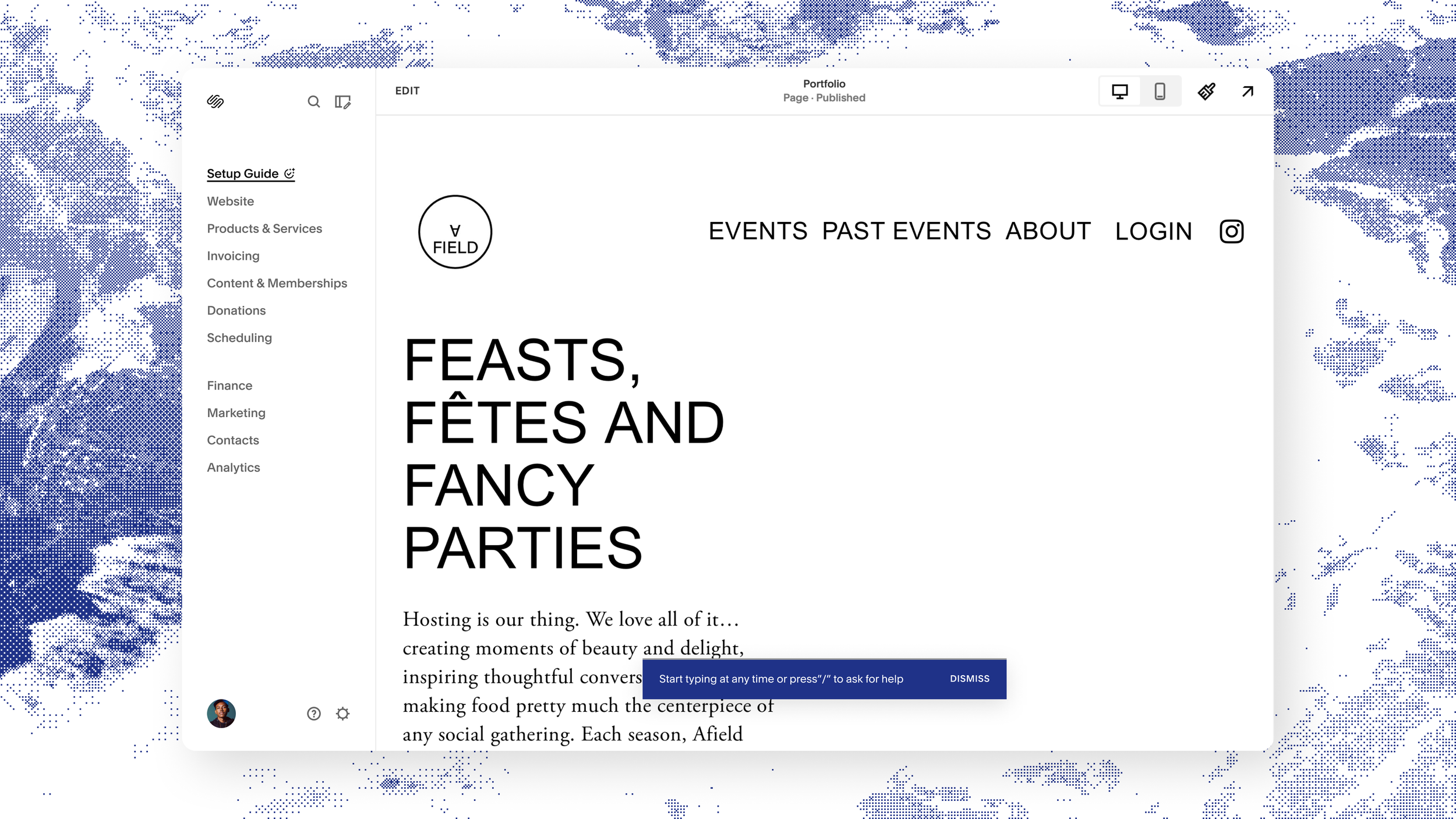
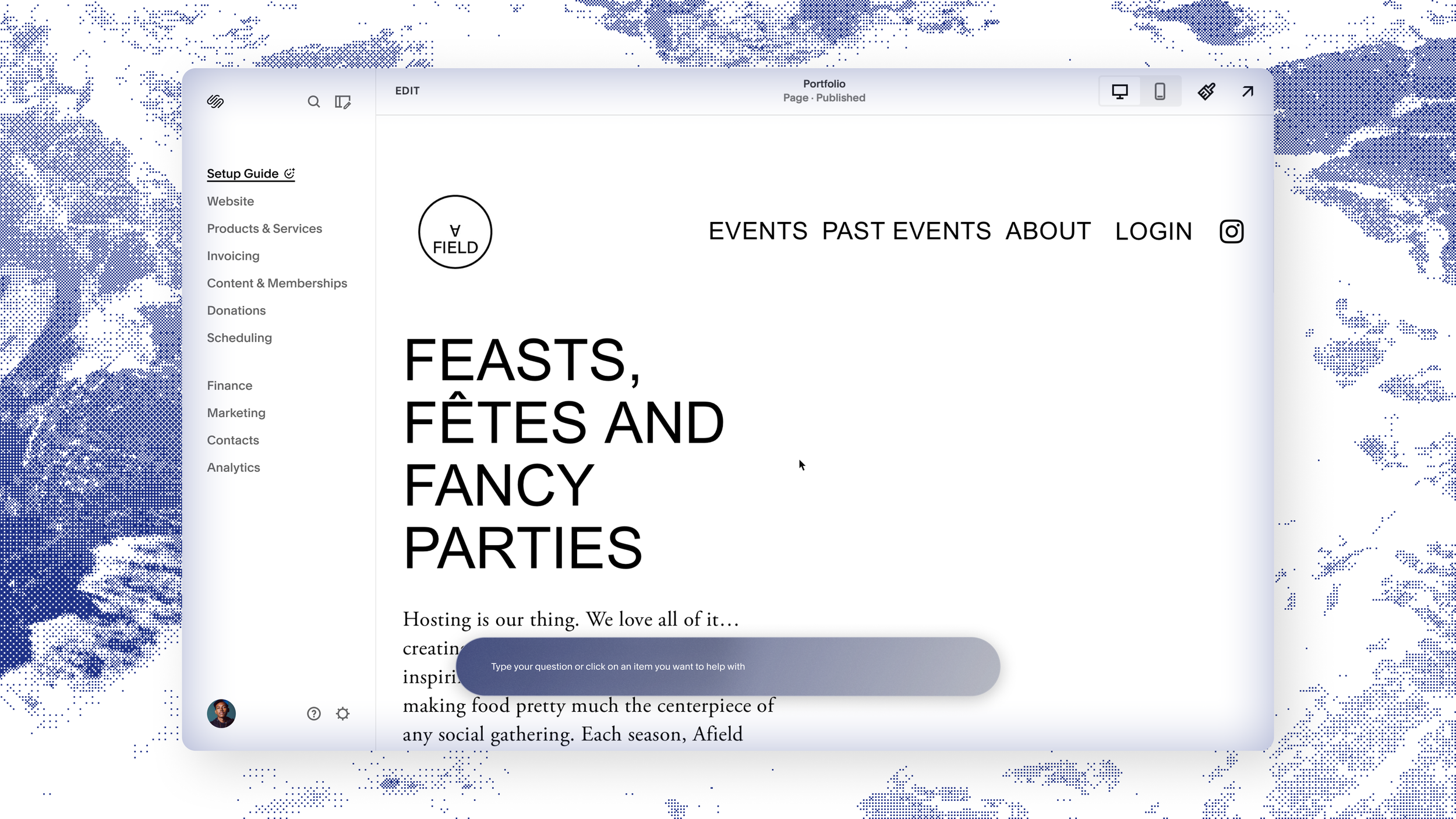
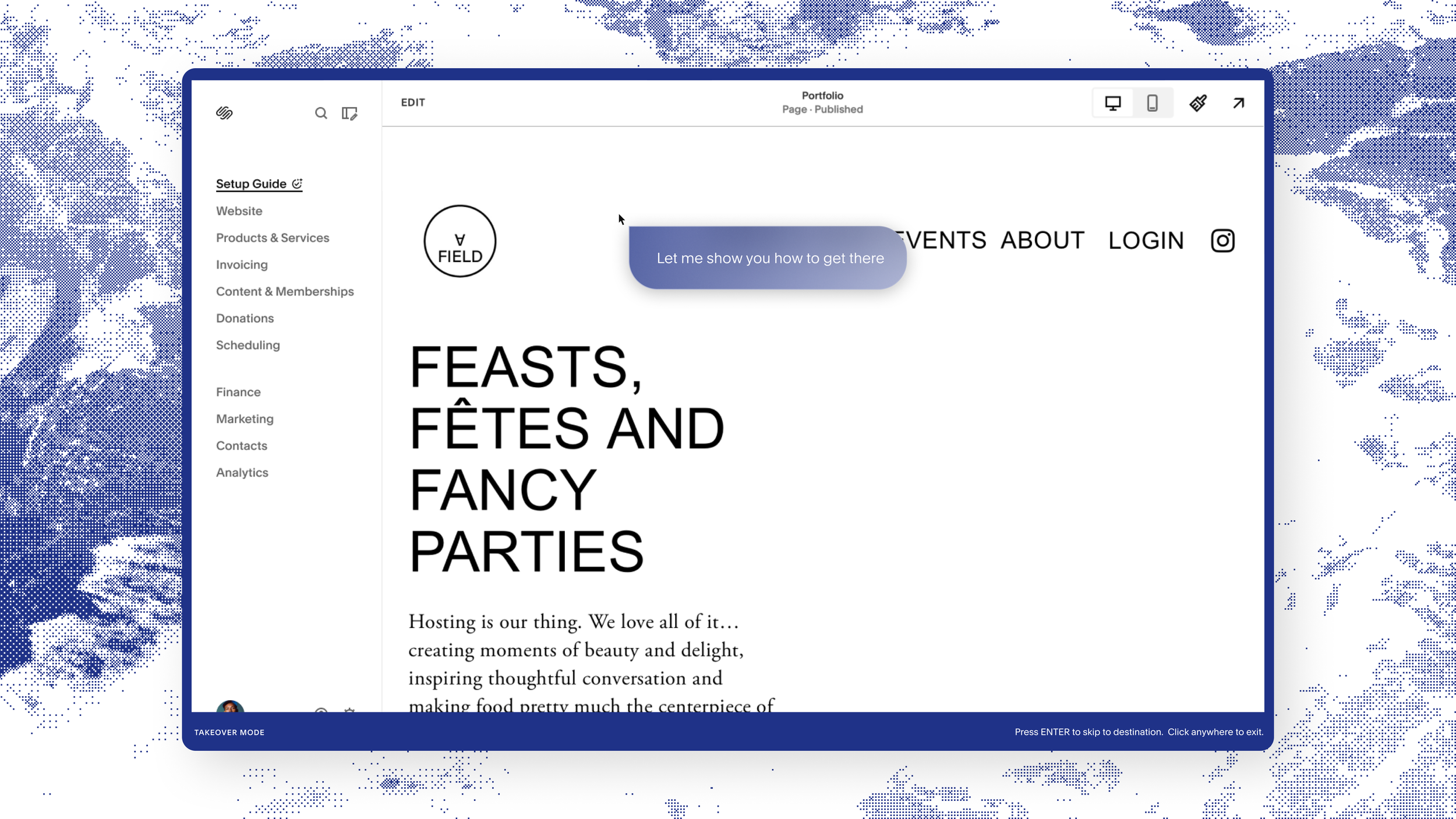
Inspired by emerging AI capabilities, I sketched a quick prototype to explore how integrated AI guidance could help customers find what they need—right within the interface.
That simple experiment became the foundation for what is now Beacon.

THE OPPORTUNITYHow might AI help our customers succeed as business owners?
AI based features were already visible across Squrespace. But they were limited to isolated tools focused on design and content generation.
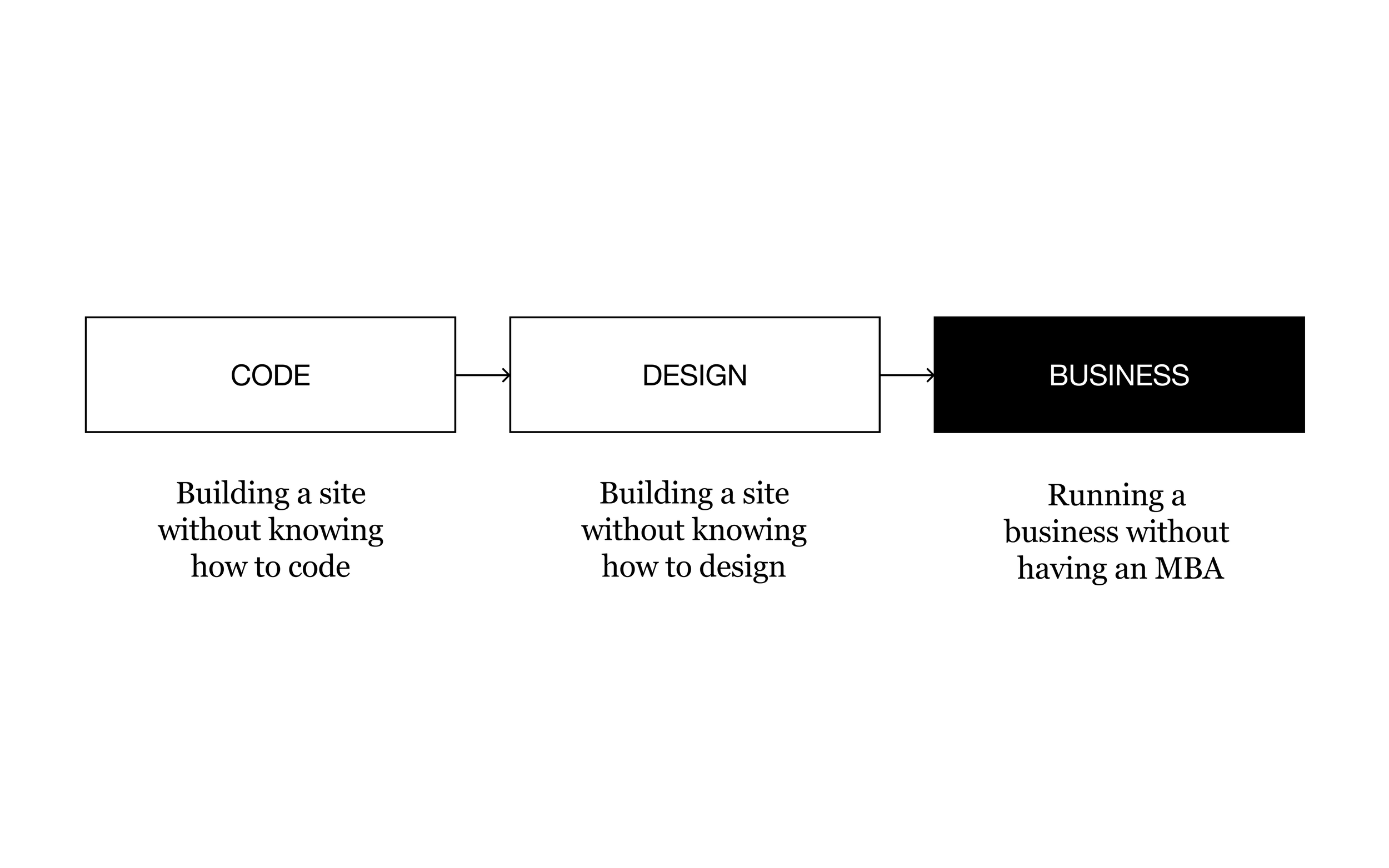
Expand scope
Move beyond content tools and use AI to empower business growth.
Unify design
Create a consistent brand and design system for AI across the platform.
Support sellers
Increase seller activation rates* by helping users with selling intent launch faster.
*Activation Rate: the percentage of users ready to sell.MY ROLEAs Senior Design Manager, I led the initiative from inception to launch.
Strategic Leadership:
Built the initial Beacon prototype independently.
Secured sprint resources and executive backing.
Elevated visibility through leadership forums.
Design Direction:
Defined the Beacon model: sync/async × local/global.
Established principles: augment, respect limits, close loops.
Led identity design anchored by the orb system.
Team Building:
Expanded UX to include visual, prototyping, and systems design.
Grew IC roles aligned to business priorities (SEO, Generators).
Fostered ownership through high-visibility, cross-team work.
Partnerships:
Co-developed functional prototypes with engineering.
Collaborated with marketing on narrative and positioning.
Handed off core patterns to the Design Platform team.
PROCESSA phased approach
Beacon evolved through three phases—defining AI as a business companion, prototyping its design system and identity, and launching key features like the SEO and Product Generators—turning a concept into a platform-wide framework.
Phase 1: Strategic Foundation & Prototyping
We reframed our mission:
from helping customers build a site to helping them manage a business.
Strategic Framework
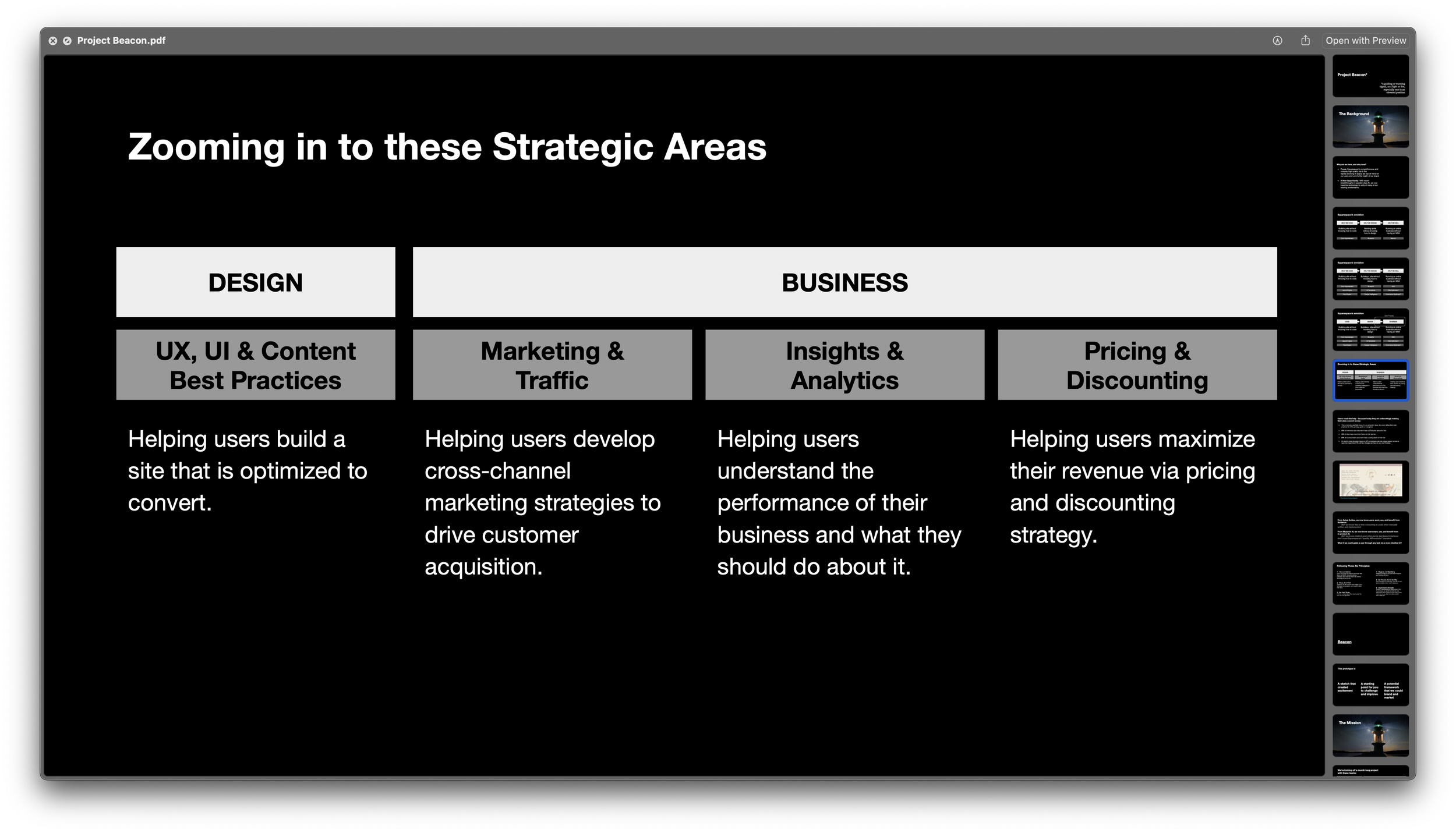
Securing staffing and kicking of a prototyping sprint
This framework guided a design–engineering sprint aimed at validating the concept and aligning feasibility.
We defined clear pairings between design and engineering, and established six guiding design principles to keep exploration focused.
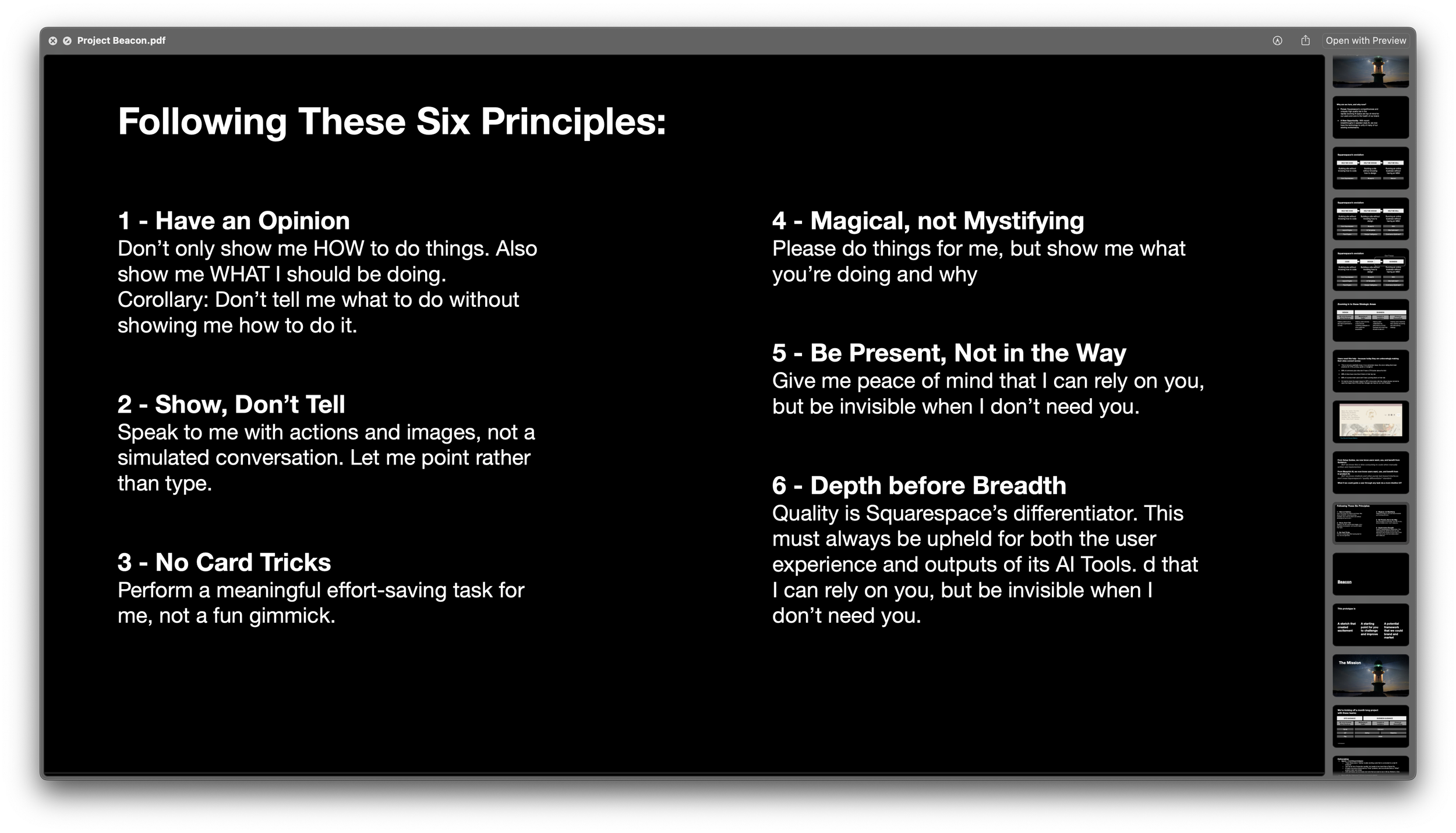
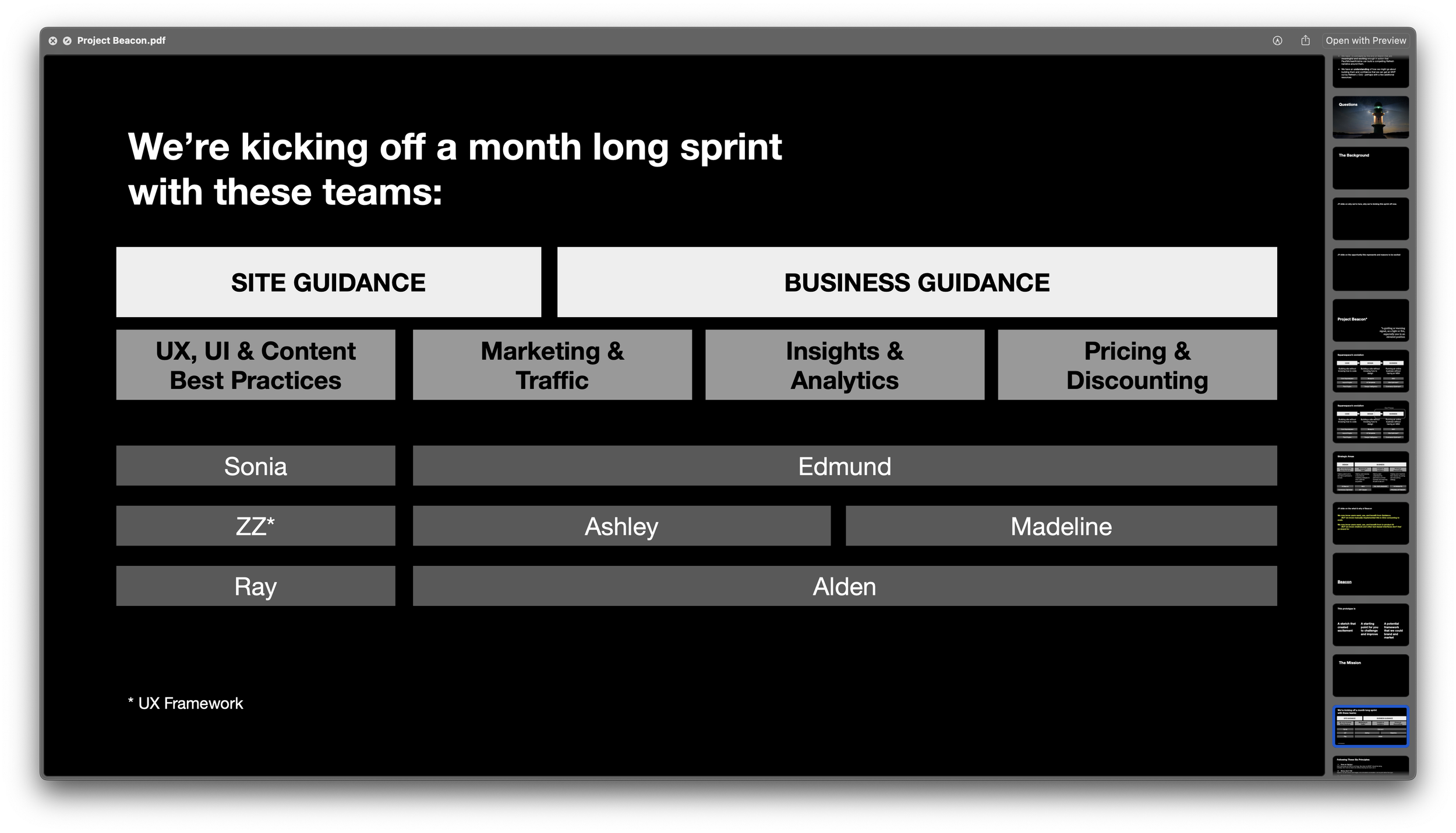
Collaborative prototyping ensured alignment between design intent and technical feasibility—balancing creative exploration with system-level rigor.
Prototyping across design and engineering
Engineering Prototype
Demonstrated how AI could analyze a customer’s site and recommend improvements.
Design Visualization
Illustrated how such interactions could be integrated into the product experience.
Phase 2: Scaling And Defining A System
Expanding
the working group
As the project grew, we expanded the working group, bringing in specialized teams from across the organization
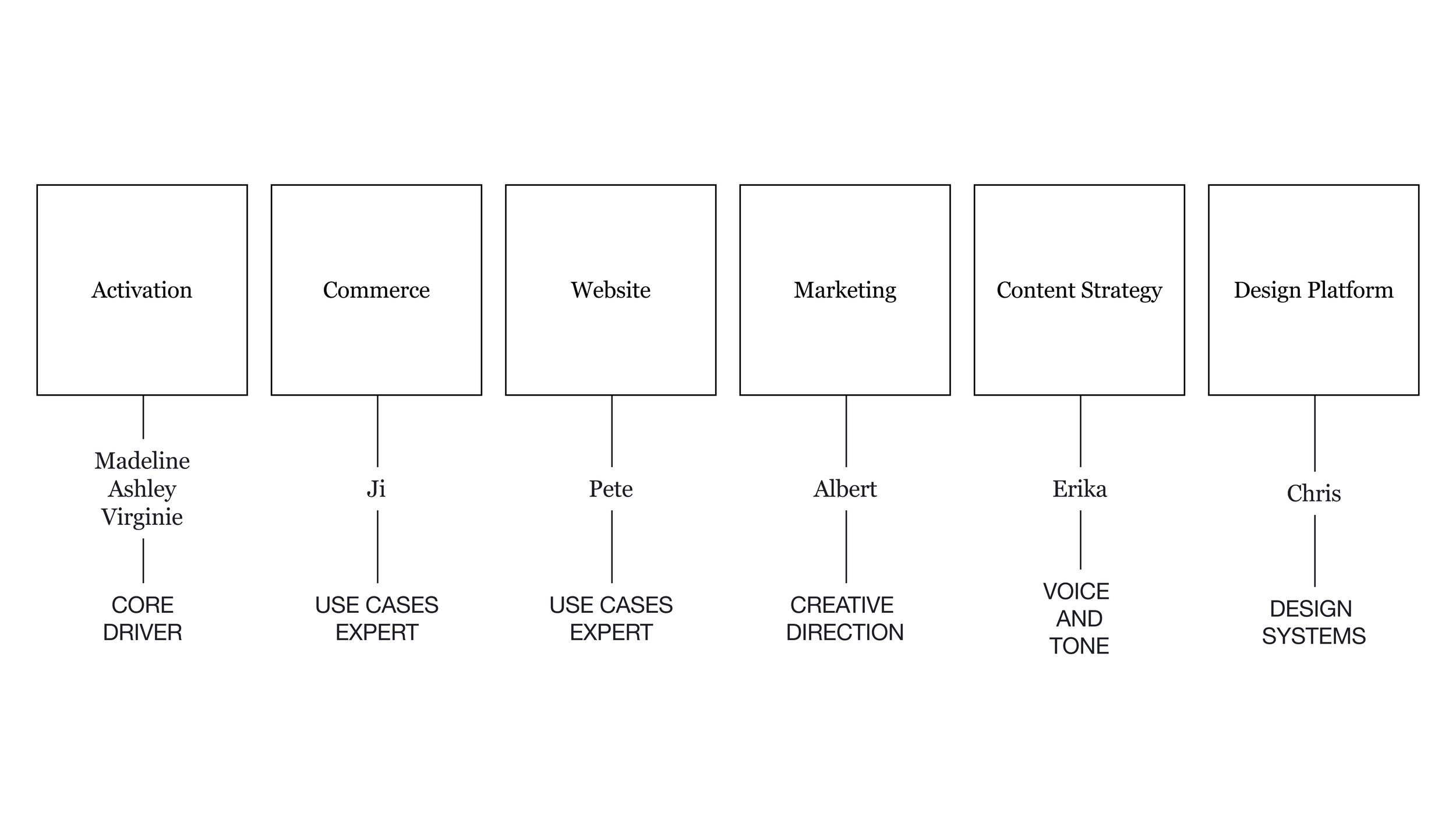
Each team member focused on exploring how AI might appear across contexts and surfaces
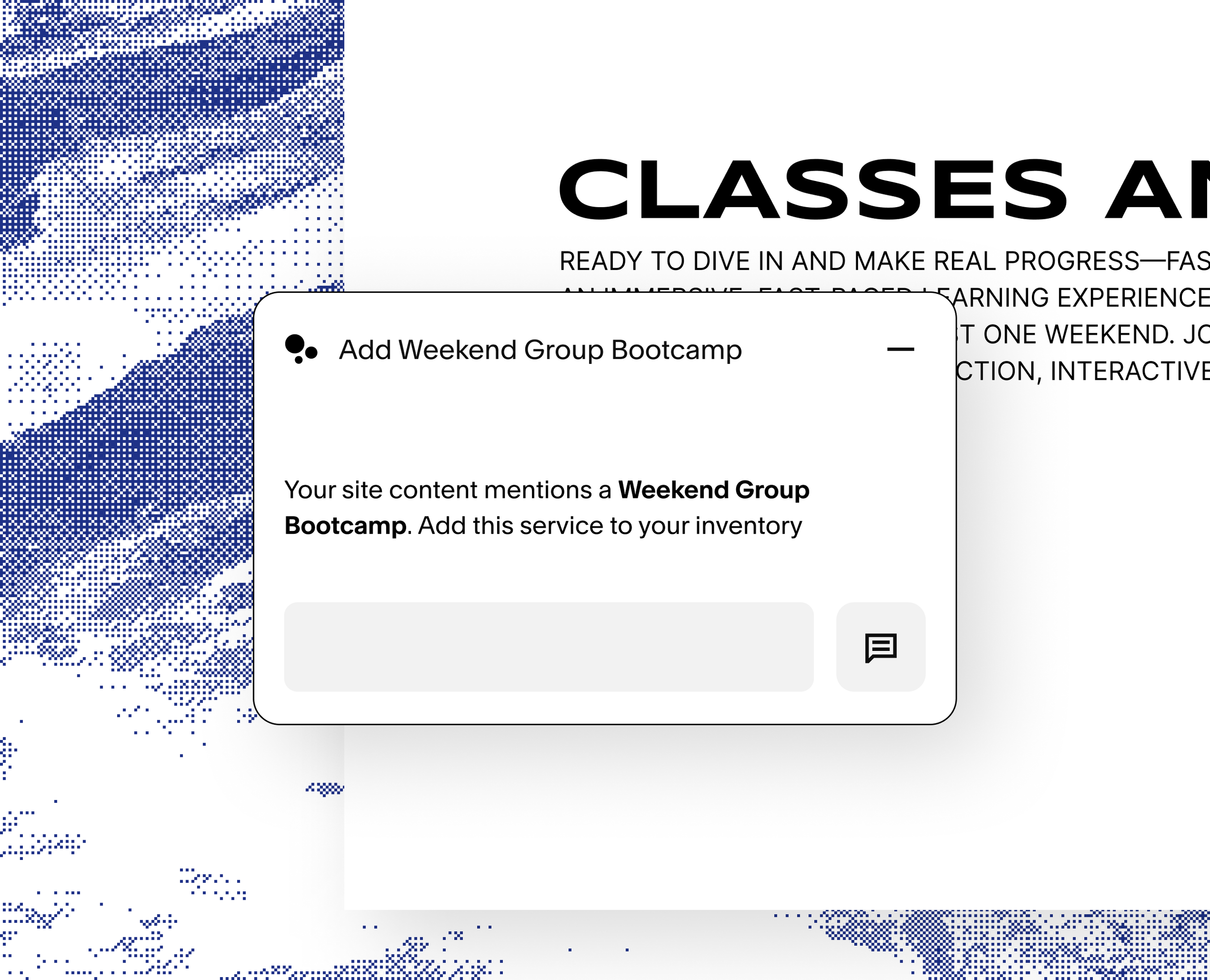
In-product recommendations
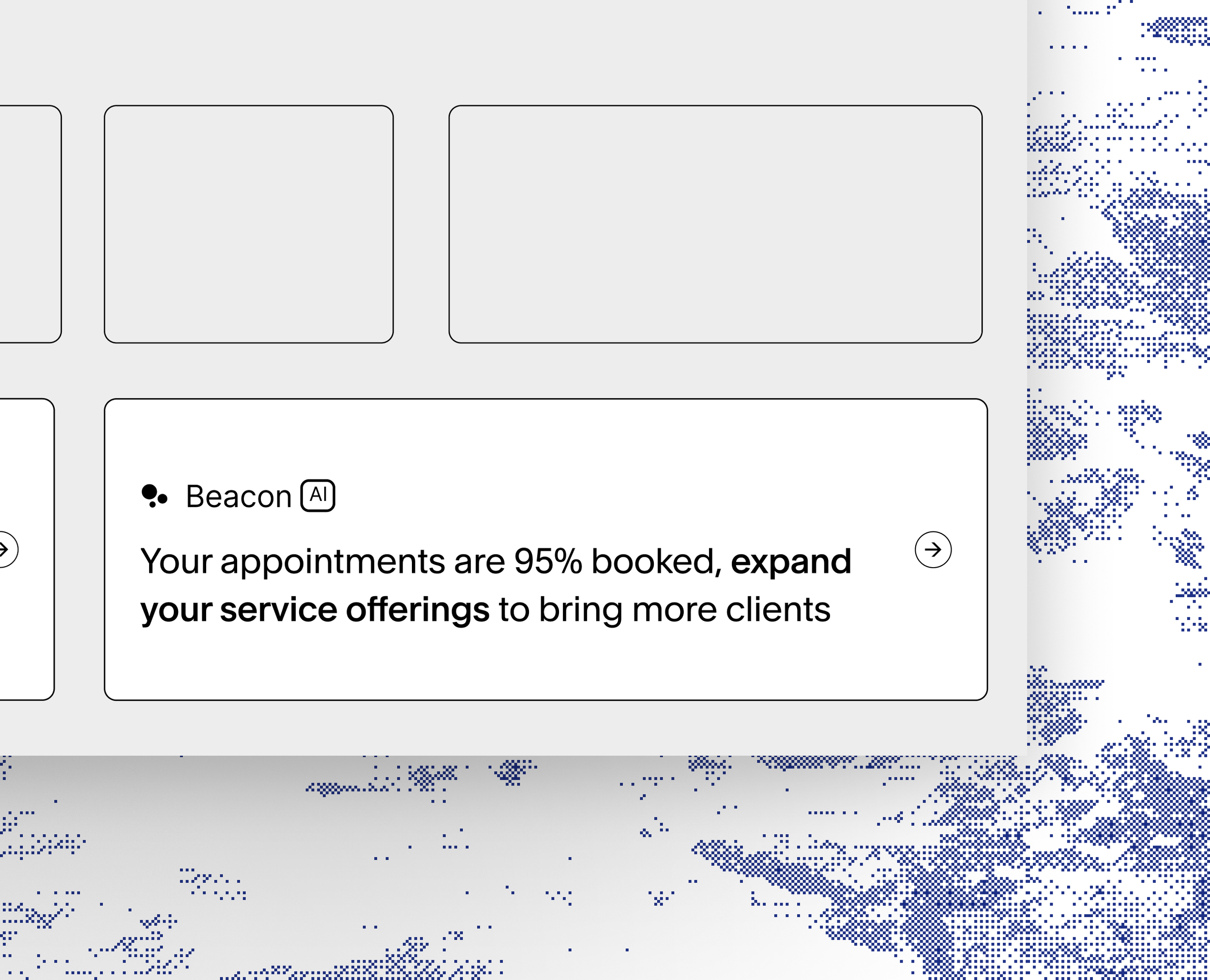
Dashboard integrations

Wizard flows

Conversational chat
OUTCOME 1
A framework for how to integrate AI into our product

This framework redefined how users interact with increasingly autonomous systems—moving beyond chat-based interfaces to a multi-surface model where AI collaborates with users across time and context.
Anchored on two key dimensions—sync vs. async and local vs. global—the model guides how AI adapts from quick, contextual help to long-term, goal-oriented workflows.
LOCAL /
PASSIVE
Inline recommendations for quick, contextual actions (e.g., updating a product price).
LOCAL /
ACTIVE
Direct editing and manipulation within the UI (e.g., creating a form).
GLOBAL /
ACTIVE
Chat-based interactions for broader business actions (e.g., adding a new service line).
Carving out a mandate for the team to drive AI work across the organization
OUTCOME 2
Strong partnerships, a shared vision, and clear communication elevated the concept to an organization-wide initiative—culminating in a vision video shared at All Hands and board meetings.


Phase 3: Implementation And Launch
Executing
the strategy
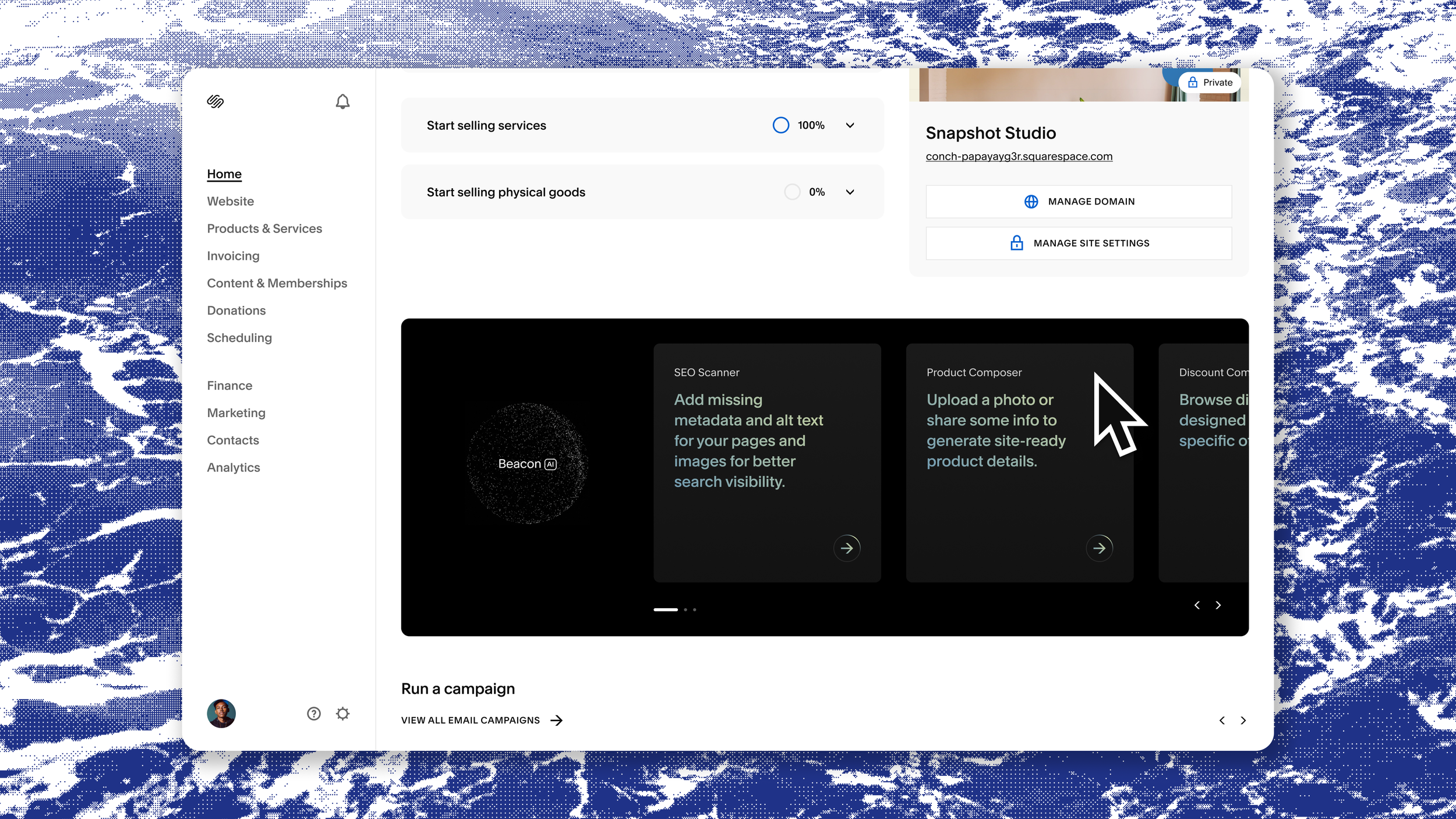
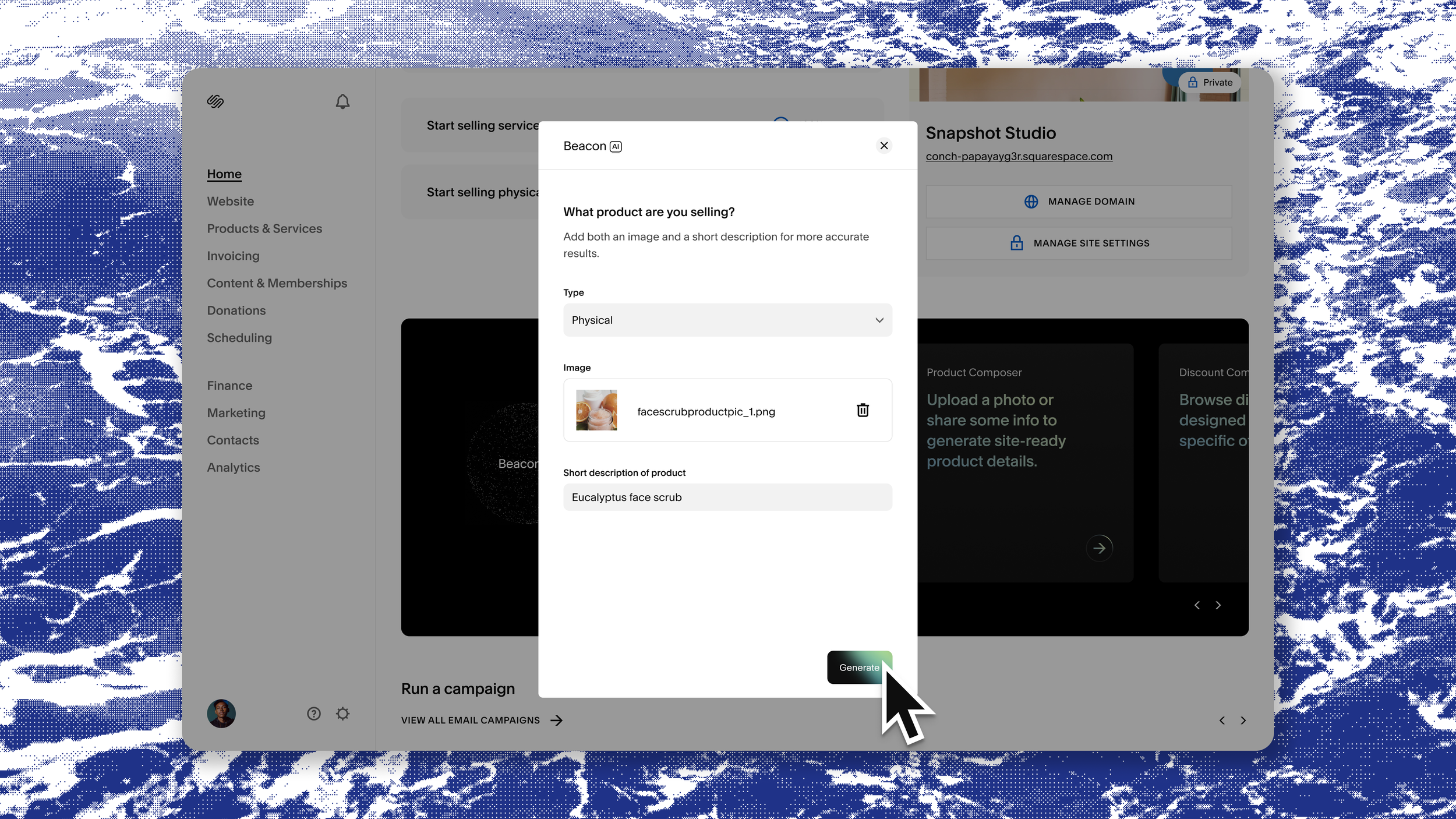
With leadership support secured, we focused on launching the first AI-powered features.
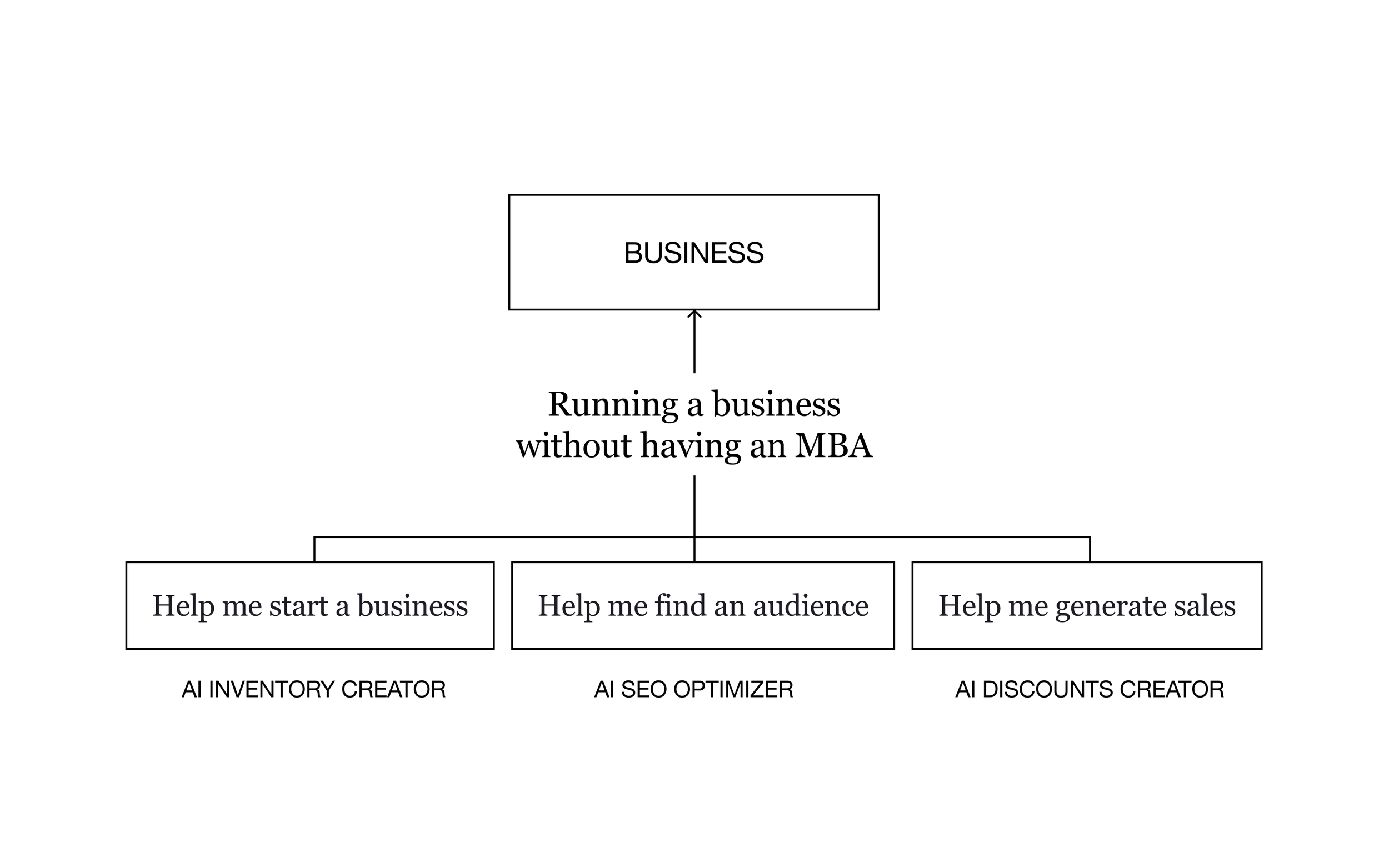
AI INVENTORY CREATOR
Help me start a business
KEY INSIGHT
Only 40% of users who begin adding a product complete setup.
SOLUTION
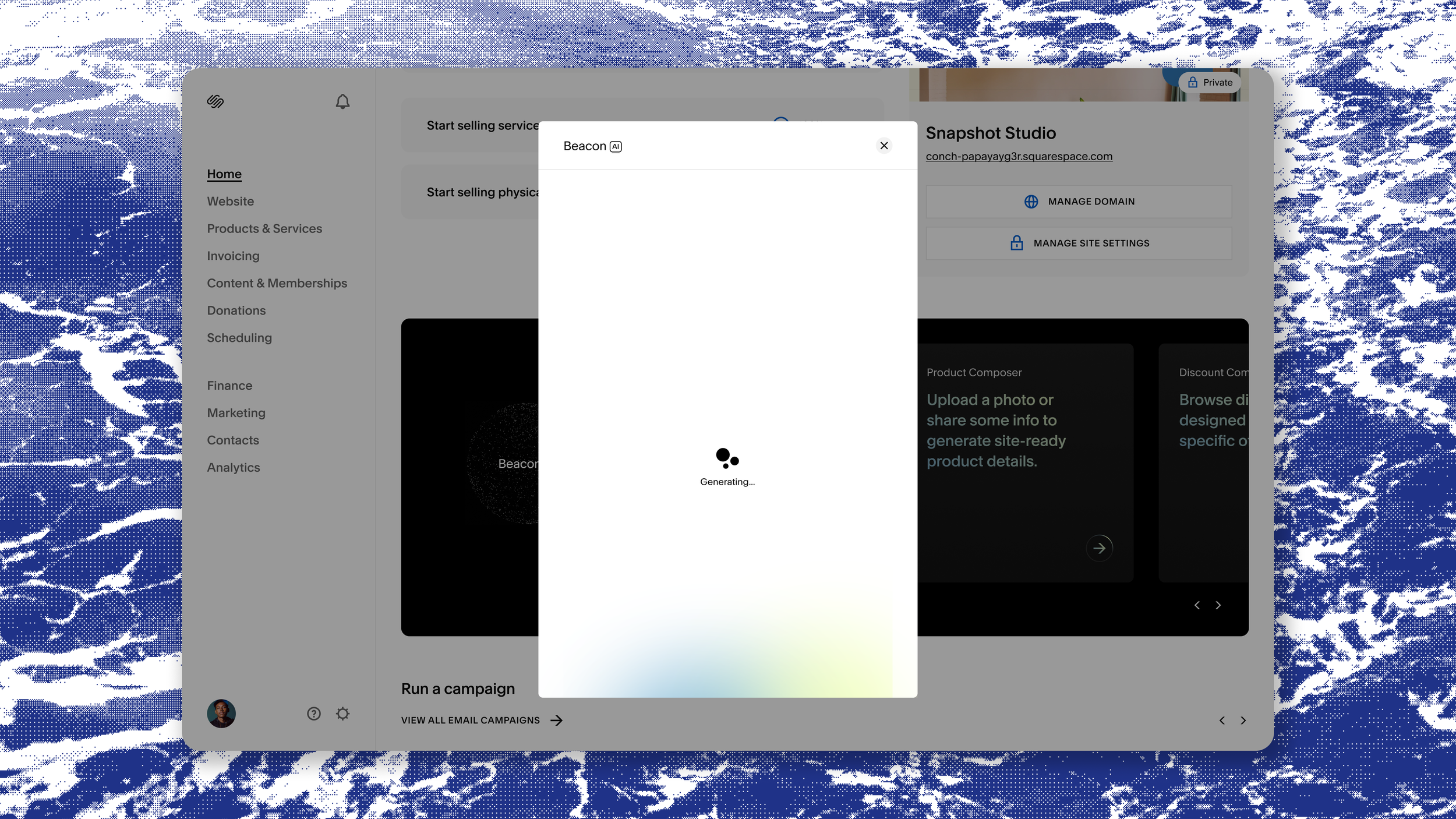
An AI feature that generates all product details from a single image.
IMPACT
+7,500 activations

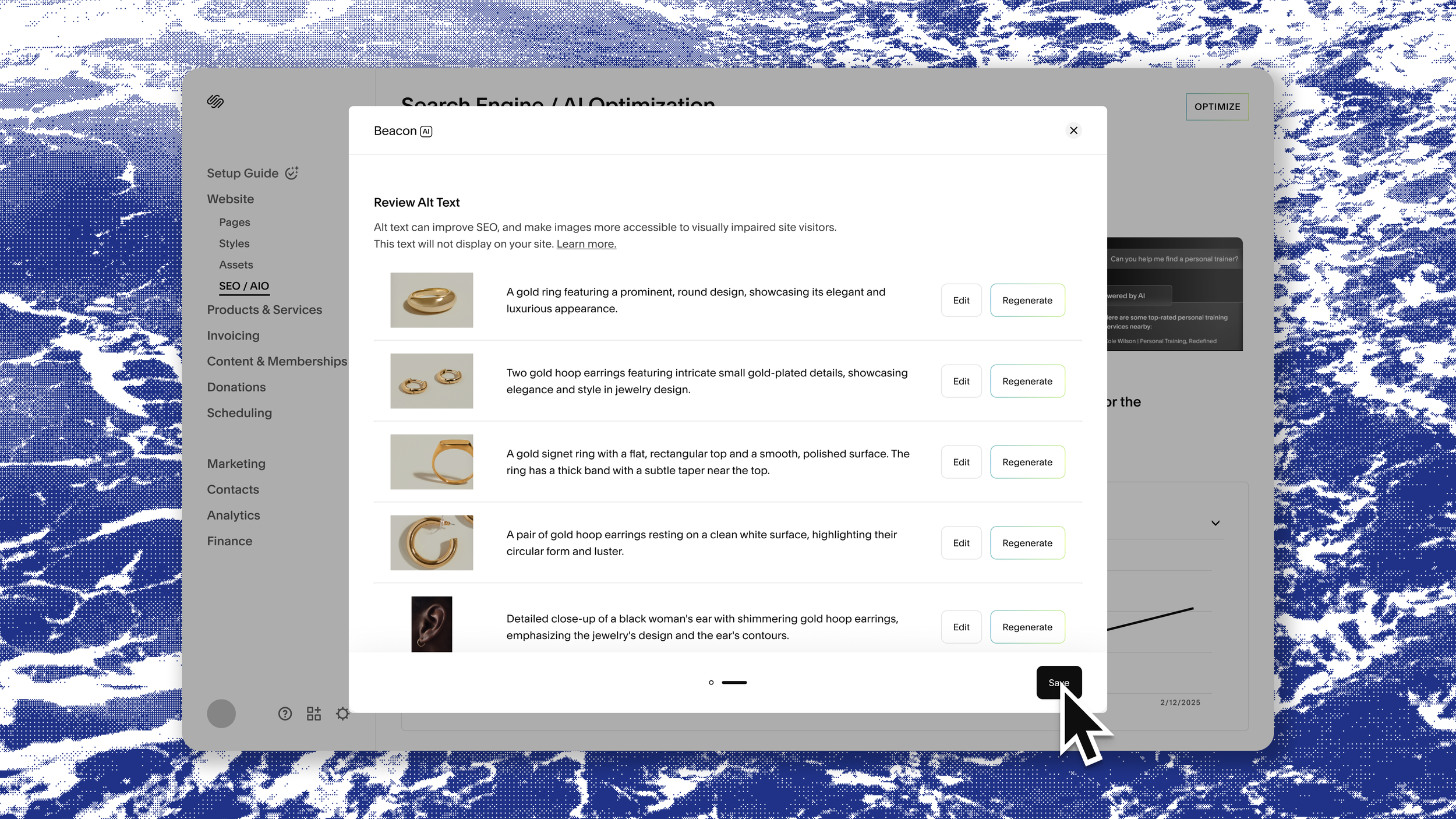
AI SEO OPTIMIZER
Help me find an audience
KEY INSIGHT
80% of users don’t add SEO descriptions, hurting search rankings.
SOLUTION
AI-generated image descriptions with a few clicks.
IMPACT
+2000 activations


AI DISCOUNT CREATOR
Help me generate sales
KEY INSIGHT
Discount campaigns can raise sales by up to 50%, yet only 10% of users use them.
SOLUTION
AI-generated seasonal discount campaigns based on product data.
IMPACT
+2000 activations


